
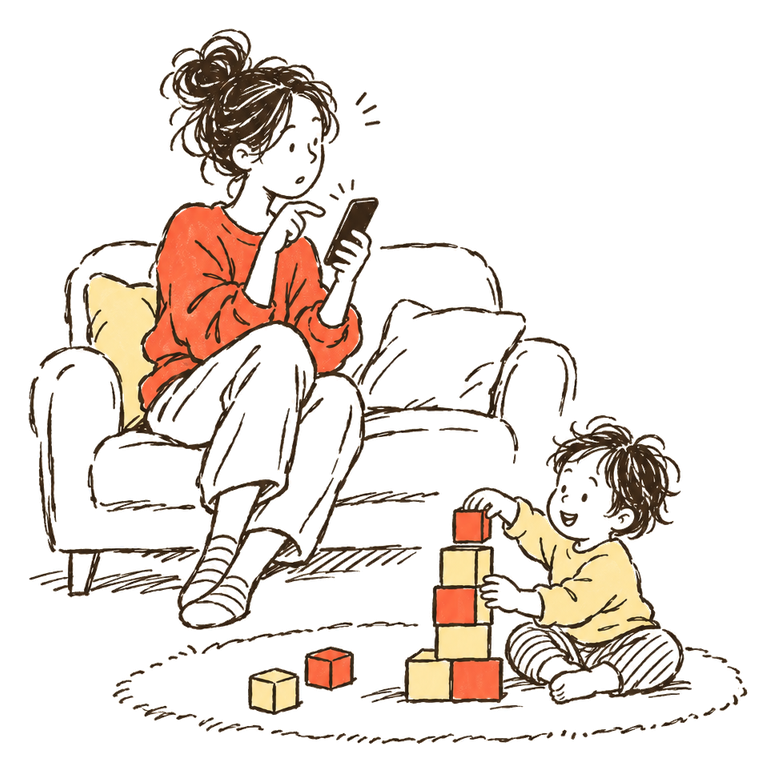
Sharing about a child is part of family life: a first smile sent to the grandparents, a birthday photo, a question about sleep in a parenting group. Sharenting is the word for that habit, and it comes up most when people ask how much is too much, and who ends up seeing it.
This guide explains what the word means, why parents share, why child-safety bodies and researchers talk about it, and the practical steps they describe for sharing more privately. It doesn’t tell you to stop sharing. Most of the advice is about who sees a photo and what it gives away.
What does sharenting mean?
Sharenting means parents sharing news, photos and videos of their children online, usually on social media. The word is a blend of share and parenting. According to an article in The Conversation, the word entered the Oxford English Dictionary in June 2022. Definitions differ on how much sharing the word covers.
Dictionary.com lists the verb sharent, a blend of share and parent, for posting photos or other details about your child on social media often, first recorded between 2010 and 2015.
In a UNICEF interview, a law professor who studies the subject defines sharenting as parents talking about their children outside the family circle, which includes a social media post, a blog post or a video sent through a messaging app. By that definition, a photo in a family chat counts too.
A related word, oversharenting, is used for sharing too much. A 2015 report from the C.S. Mott Children’s Hospital National Poll on Children’s Health at the University of Michigan used it for details that are too personal or could embarrass a child when they’re older.
Why parents share
Parents share to keep distant family in touch, to feel less alone and to get advice from other parents. In a University of Michigan poll published in 2015, parents of young children rated social media most useful for feeling they are not alone, learning what not to do and getting advice.
The poll, from the C.S. Mott Children’s Hospital National Poll on Children’s Health, surveyed 569 US parents of children aged 0 to 4 in November and December 2014. Parents rated social media as useful for:
- making them feel they are not alone (72%)
- learning what not to do (70%)
- getting advice from more experienced parents (67%)
- helping them worry less (62%)
The report adds that sharing photos and stories helps distant relatives and friends stay in touch. The same parents also had worries, which the next section covers.
Why people talk about it
Most of the concern is about three things: who ends up seeing a photo, what it reveals, and how the child will feel about it later. Child-safety bodies point out that a photo can travel further than intended, can carry a location, and becomes part of a child’s digital footprint before the child has a say.
Photos can travel further than you meant
Australia’s eSafety Commissioner says a photo shared in a private chat could be copied and reposted publicly without your or your child’s consent. It also notes that photos can be harvested from the platforms you use, including to train AI tools and create deepfakes. The American Academy of Pediatrics (AAP) says that when photos are shared with a public audience, sharenting can create risks like unwanted contact.
Australian police make a similar point. The Australian Federal Police (AFP) says that without strong privacy settings, everyday photos such as a first day at school may be seen by unintended audiences. ThinkUKnow, the AFP-led education programme, says police continue to see everyday images of children in the collections of online child sex offenders.
Photos can give away where a child is
A school uniform, a house number or a caption can show where a child lives or spends the day. eSafety also says most digital photos and videos contain hidden information about the time, date and GPS coordinates of where they were taken, and that some social media platforms hide or remove it automatically, so it’s worth checking how much you’re sharing. The AAP’s summary of research lists unintentionally sharing location or daily routines among the risks to children’s privacy and safety.
What’s shared becomes part of their footprint
eSafety says the photos and videos you share contribute to your child’s digital reputation and may be seen forever. An article on HealthyChildren.org, the AAP’s site for parents, adds that privacy settings can be got around, for example by screenshots, and that taking a post down doesn’t mean it’s completely gone.
Some of it can also end up with companies. In the UNICEF interview, the same law professor says that in some countries data brokers build digital dossiers on children from what parents share. A 2022 article in The Conversation by a Northumbria University researcher says researchers found it relatively easy for third parties to collect children’s photos, names and birth dates from parents’ Facebook and Instagram posts and link them with other sources.
Children grow up and have views
Babies can’t say what they think, but older children do. The AAP describes a review of studies which found that children tend to judge their parents’ posts more harshly than sharing by their peers. The article in The Conversation notes that children’s views vary: some say their parents’ posts make them feel happy and proud, while others describe embarrassment, and many want to be asked first.
What parents say in polls
In a 2023 US poll, most parents of young children said they use social media for parenting, and most had at least one worry about it. The most common way they limit sharing is privacy settings. About a third avoid posting photos or videos of their child at all.
The poll was run in August 2023 for the C.S. Mott Children’s Hospital National Poll on Children’s Health at the University of Michigan, and these results come from 614 parents with at least one child aged 0 to 4. The figures are what parents reported about themselves and others:
- 80% said they use social media to discuss parenting topics.
- 72% named at least one concern about social media sharing, including others finding out their family’s private information (38%).
- 63% felt other parents overshare by giving personal information that could identify a child’s location, and 62% by giving information that might embarrass the child when they’re older.
- To limit sharing, 57% use privacy settings to restrict who can see posts, 30% avoid posting photos or videos of their child, and 22% only take part in closed groups.
The 2015 poll from the same team, described above, asked about sharing too much. Of the parents who use social media, 74% knew another parent who had shared too much about a child. That included embarrassing information (56%), personal information that could identify a child’s location (51%) and inappropriate photos (27%). In the same poll, 68% were concerned about someone finding out private information about their child, 67% about photos of their child being shared, and 52% that their child might be embarrassed when older.
What child-safety organisations say
The organisations below don’t tell parents to stop sharing. The AAP says there’s no one right answer, and that sharing about your family isn’t inherently bad or wrong but needs thought. UNICEF’s interviewee says sharing can never be 100 per cent safe and is a matter of balancing risks and benefits.
- eSafety Commissioner (Australia) suggests sharing only with people you really know and trust, leaving out details that reveal a child’s location, checking with other parents before posting their children, and involving your child in what gets shared.
- Australian Federal Police suggests strong privacy settings, backgrounds that don’t give away your address, and sharing only with people you know in person and trust. It made a video showing how to blur school logos, name tags and street numbers.
- American Academy of Pediatrics suggests managing privacy settings, choosing photos with intention, and involving your child in the decision.
- UNICEF published an interview suggesting parents avoid embarrassing stories and photos, never share pictures of children in any state of undress, and talk with children about how they decide what to share.
Laws are changing in some places. France passed a law on children’s image rights in February 2024. According to a summary by the law firm Bird & Bird, it makes both parents jointly responsible for protecting their child’s image, takes the child’s view into account according to age and maturity, and, when parents disagree, lets a judge stop one parent posting about the child without the other’s agreement.
Ways families share more privately
The organisations above describe a handful of practical steps. Most of them are about the audience: sharing with fewer people, in places that don’t spread a photo further. The rest are about the photo itself, such as removing location data and leaving out names, school logos and anything that shows where you live.
Share with fewer people
eSafety suggests limiting who can see posts with privacy settings rather than posting to all your friends, and notes that when a friend likes or comments on a photo, it may become visible to their friends. It also lists ways to share outside social media that may give you more control, such as email, text messages and password-protected online services. The article in The Conversation mentions private social networks made for families. Our guide to sharing baby photos without social media compares chats, albums, folders and family apps on who can see what.
Remove the location
eSafety suggests checking which apps use your location and turning it off or limiting it. On iPhone, Apple’s guide explains how: in the Photos app, tap Share, then Options, and turn off Location before you send. You can also stop the Camera from recording location in Settings, under Privacy & Security, Location Services, Camera, and choosing Never. Our guide on removing location from photos has the steps for Android, Mac and Windows too.
Leave out what identifies them
eSafety suggests leaving out full names, contact details, uniforms that identify a school or local team, and anything in front of your home that shows where you live. It also suggests not sharing your child’s activity schedules. The AAP passes on researchers’ ideas for photos that show less: from a distance, while the child is looking away, of just a hand, or with the face covered by an emoji or blurred.
Ask before you post
The NSW Government suggests asking your child for consent before posting as they get older. eSafety shares a researcher’s advice to explain why you’d like to take or share a photo, ask whether it’s okay, and respect it if your child says no. eSafety also suggests always checking with other parents before posting photos that include their children.
Agree on it with family
Family, friends and schools share children’s photos too, as the article in The Conversation notes. UNICEF’s interviewee suggests honest conversations with family about your preferences, and the article in The Conversation suggests having them before the baby is born, to avoid conflict later. Our guide on asking family not to post baby photos has messages you can send.
Look back at what’s already out there
If you’ve shared a lot and are having second thoughts, UNICEF’s interviewee says most parents don’t overshare to be malicious. The suggestion is to look at what you’ve shared and delete what you can, and to bring children of around 9 or 10 into going through it every few months.
Where TinyThen fits
TinyThen is a private family photo sharing app for parents of babies and young children. It isn’t open yet. Each child has their own story, and you choose for each person what they can see and add. There are no likes, comments or algorithm, and shared previews have GPS and other embedded data removed. It can’t stop a screenshot, though, so talking with family still matters.
Questions
What are the risks of sharenting?
The organisations in this guide describe four main risks. A photo can travel further than you meant, it can give away where a child lives or goes to school, it becomes part of the child’s digital footprint, and the child may feel differently about it when older. eSafety also notes that photos can be harvested from platforms, including to train AI tools.
Why do parents share photos of their children?
Mostly to stay in touch and to get support. In the 2015 Mott poll, 72% of parents of young children said social media made them feel they are not alone, and the report notes that photos help distant relatives and friends stay in touch.
Is sharenting illegal?
None of the sources in this guide describe sharenting as illegal in itself. eSafety says that in Australia you don’t legally have to ask your child’s consent before sharing photos or videos of them. France’s 2024 law gives children image rights that both parents must protect, and lets a judge step in when parents disagree. Rules differ by country, so this isn’t legal advice.
Is it bad to post photos of my baby?
The AAP says there’s no one right answer and that sharing about your family isn’t inherently bad or wrong. What changes the risk, according to the organisations in this guide, is how many people can see a post and what it reveals, such as a name, a school or a location.
Does sharing in a family group chat count as sharenting?
It depends on whose definition you use. The broad one in the UNICEF interview includes videos sent through a messaging app. A chat is a smaller audience than a public post, but eSafety notes that a photo shared in a private chat can still be copied and reposted.
When should I start asking my child before posting?
There’s no set age in the sources here. The NSW Government suggests asking for consent as your child gets older, and the AAP suggests involving children in the decision. UNICEF’s interviewee suggests bringing children of around 9 or 10 into reviewing what’s been posted about them.
How do I get a photo of my child taken down?
eSafety suggests asking the person who posted it to delete it first. If they refuse, or you can’t contact them, you can report it to the platform where it was posted. If a school or club posted it, eSafety suggests contacting them and asking about their policy for photos. Our guide on what to do if a photo is already up covers the Facebook, Instagram and Google forms.
Sources
- Dictionary.com: sharent
- UNICEF Parenting: What you need to know about “sharenting”
- eSafety Commissioner (Australia): Privacy and your child
- American Academy of Pediatrics: Is it safe to upload pictures and videos of my children on social media?
- HealthyChildren.org (AAP): Sharenting: 5 Questions to Ask Before You Post
- C.S. Mott Children’s Hospital National Poll on Children’s Health: Sharing on parenting: Getting advice through social media (2023)
- C.S. Mott Children’s Hospital National Poll on Children’s Health: Parents on social media: Likes and dislikes of sharenting (2015)
- Australian Federal Police: Advice for parents on sharing back-to-school images online
- ThinkUKnow Australia: Sharing your child’s information
- NSW Government: Posting about your child online
- The Conversation (Northumbria University): Should I post photos of my children online? Here’s what new parents need to know about sharenting
- Better Internet for Kids: France, Law No. 2024-120 of February 19, 2024 on children’s image rights
- Bird & Bird: New legal framework for children’s privacy (France)
- Apple Support: Manage location metadata in Photos